
Supporting grass fields
Why investing in real grass fields is so important?
“Synthetic turf” fields are costly plastic carpeted heat islands – each 2-acre plastic field generates 100s of tons of waste and sheds microplastics into the air the students breathe as well as into the soil, water over its 8-10 year usable life. The plastic carpet becomes hotter than asphalt in the sun, while grass is always close to ambient air temperature. Furthermore, according to MCPS, for the multimillion dollar price of a single plastic synthetic turf they can install at least 4 cool, health-giving durable sustainable grass fields (and unlike plastic there is no disposal and replacement cost).
MCPS created the access and playability problem by disinvesting in grass field design, and management and ignoring experts over the past 20 years. MCPS complains about poorly designed and managed grass ( MCPS’s fault), while ignoring or downplaying the health, environmental and playability problems created by dozens of acres of disposable, disintegrating plastic carpets now falling apart in our midst.
First, real grass turf fields can be constructed and maintained to be high-performing, high-use and durable, while cooling and oxygenating the air around the players, filtering rain water and providing a firm but forgiving surface for play. They can do so at a fraction of the cost of plastic fields but grass fields have struggled because they’ve never been funded properly or given the appropriate expert attention that is provided to disposable, short-lived plastic fields. MCPS owes it to parents, students and taxpayers to create the safer, softer, cooler & cost-effective grass surfaces that athletes from amateurs up to the NFL, NCAA, and FIFA all want.

Plastic fields are losers on every angle:
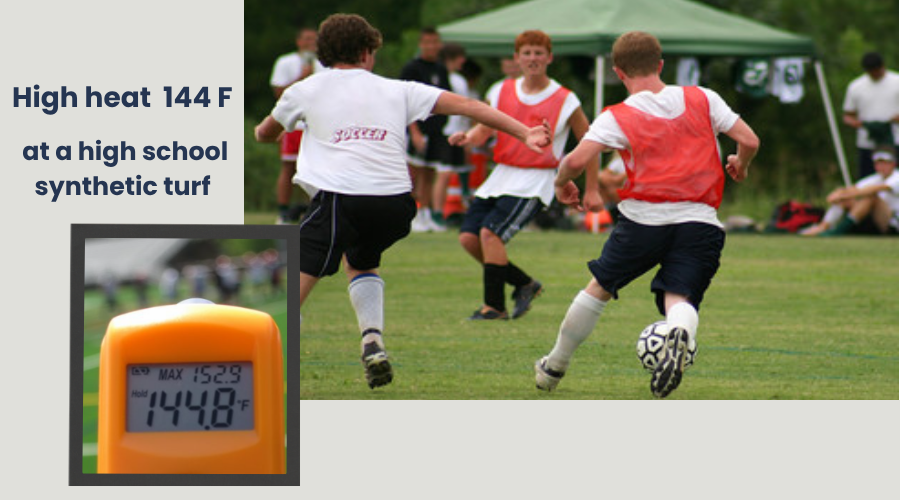
HEAT ISLANDS: Exertional heat stroke is the #1 cause of death in high school football. The plastic synthetic-turf carpet is 30 to 60 degrees hotter than ambient temperature, no matter the infill used between the blades, and hotter even than asphalt, on over more than 2 acres per field.
HIGH INJURY: Plastic fields cause higher injury rates - especially severe abrasions and knee and ankle injuries, the top injuries for football.
Microplastics and chemical stew: Plastic blades on synturf fields continually disintegrate. Students at play are exposed to microplastics in dust from the field and related chemicals shedding from plastic field carpets. Young people, whose bodies are still developing are more sensitive to environmental toxicns
COST: Plastic fields cost at least 4 times as much as grass fields to design and install according to MCPS. MCPS pays $2.75 to $3.6M for each new plastic field and pays over $1M for each plastic replacement field every 8-10 years. By investing in well designed high quality grass fields they will save money as well as student health.
UNSUSTAINABLE PLASTIC WASTE: Used plastic synturf carpets from fields weigh 220+ tons. Moving and disposing of them is costly. There is NO real recycling for plastic carpets.
These plastic fields make a mockery of MCPS’ and the County’s sustainability and plastic reduction goals. Let’s hold these elected officials accountable. This is YOUR money down the literal drain with the disintegrating fibers from plastic fields. And they should do right for student health and safety, NOT for the arguable convenience of school administrators.
Resources
Collaborative on Health and Environment - about Artificial Turf
Safe Healthy Playing Fields - Cost Comparison
For more local information: See the MCPS Student Climate Action Council (SCAC) "Artificial Turfs Report" June 4, 2024 (Edited Jan.13, 2025).